Florida dengue outbreak reaches 485 cases, largest in continental US since the 1940s

Florida has confirmed 485 dengue fever cases this year, shattering the state’s annual record and marking the largest outbreak of the mosquito-borne illness in the continental United States in at least 80 years, according to state and federal health data.
The Centers for Disease Control and Prevention updated its data Sept. 30 to show 485 cases in Florida, more than double the 228 reported just two weeks earlier. The state’s previous record was 186 cases in 2023.
Hillsborough County, home to Tampa, leads the state with 230 cases. Miami-Dade County follows with 157, far ahead of Broward County’s 19 and Palm Beach County’s 13.
The Florida Department of Health reported more than 250 locally acquired cases statewide. The CDC says Florida’s cases are split almost evenly between local transmission and travel-related infections, with 243 acquired locally and 242 linked to travel.
Federal health officials said available data from state health departments and medical journals suggest this is the most dengue cases reported in a calendar year in any continental U.S. state since at least the 1940s.
One person has died. An elderly Tampa woman died Sept. 4, the state’s first dengue death of the year.
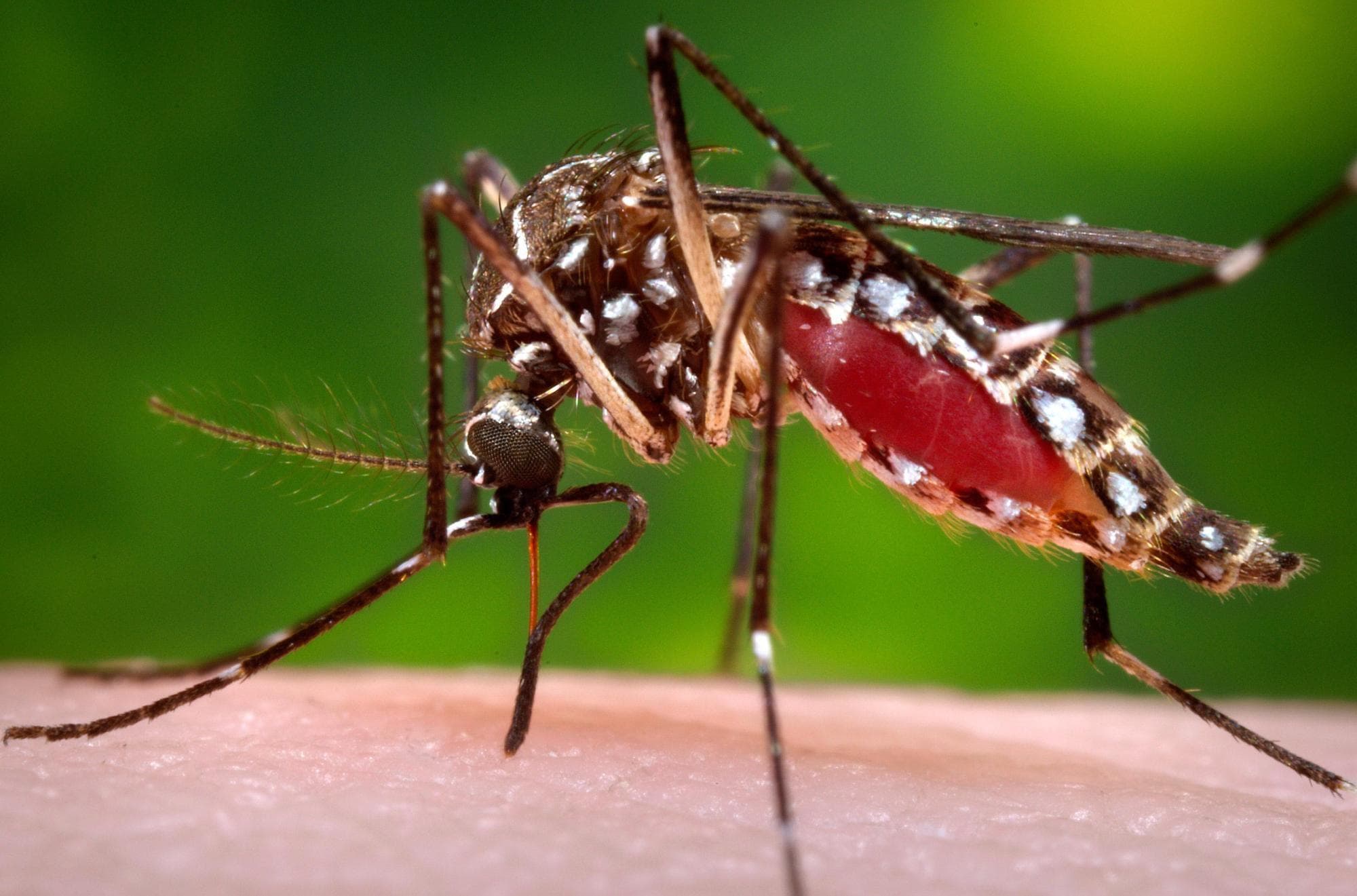
Dengue is spread primarily by the Aedes aegypti mosquito, known as the yellow-fever mosquito. The virus is not spread person to person.
Many people infected do not get sick. Others experience fever, flu-like symptoms and severe body aches. The illness is often called “breakbone fever” because of the intense pain some patients feel. Severe cases can cause bleeding, shock and death.
The World Health Organization says about 400 million people are infected globally each year and about 36,000 die. Most infections are mild or asymptomatic.
Hillsborough County declared a state of emergency Sept. 24, giving officials broader financial authority to fund mosquito eradication efforts. Pasco County declared an emergency Sept. 23, and Pinellas County followed Sept. 24.
Miami-Dade County has not declared an emergency.
In the Tampa area, crews are spraying day and night to reduce mosquito populations.
The outbreak has raised concern because most people in the Tampa area have no prior immunity to dengue, said Dawn Wesson, a Tulane University expert on mosquito-borne diseases.
There are four types of dengue virus. A first infection builds lifetime immunity to that specific type, but a second infection with a different type can be more severe. That complicates vaccine development.
The mosquitoes that spread dengue have been expanding their range as the climate warms, experts say. For decades, most continental U.S. cases were linked to international travel, with locally acquired cases largely limited to Puerto Rico and the Texas-Mexico border.
The first locally acquired dengue cases in the continental U.S. outside the Texas border since 1945 were reported in Key West in 2009 and 2010.
Nationally, the CDC has recorded 2,145 dengue cases in the United States this year. Florida accounts for nearly one in four. The CDC says 42% of U.S. cases have led to hospitalization, while 2% are classified as severe dengue.
The WHO says dengue is now endemic in more than 100 countries. Reported global cases rose from 505,430 in 2000 to 14.6 million in 2024, though the agency says actual numbers are higher because many cases go unreported.